Skip to Content

About: kbert

Recent Posts by kbert

Shipping Containers and Usage

Enlisted below are the major shipping containers used in Nigeria.

DRY CONTAINERS

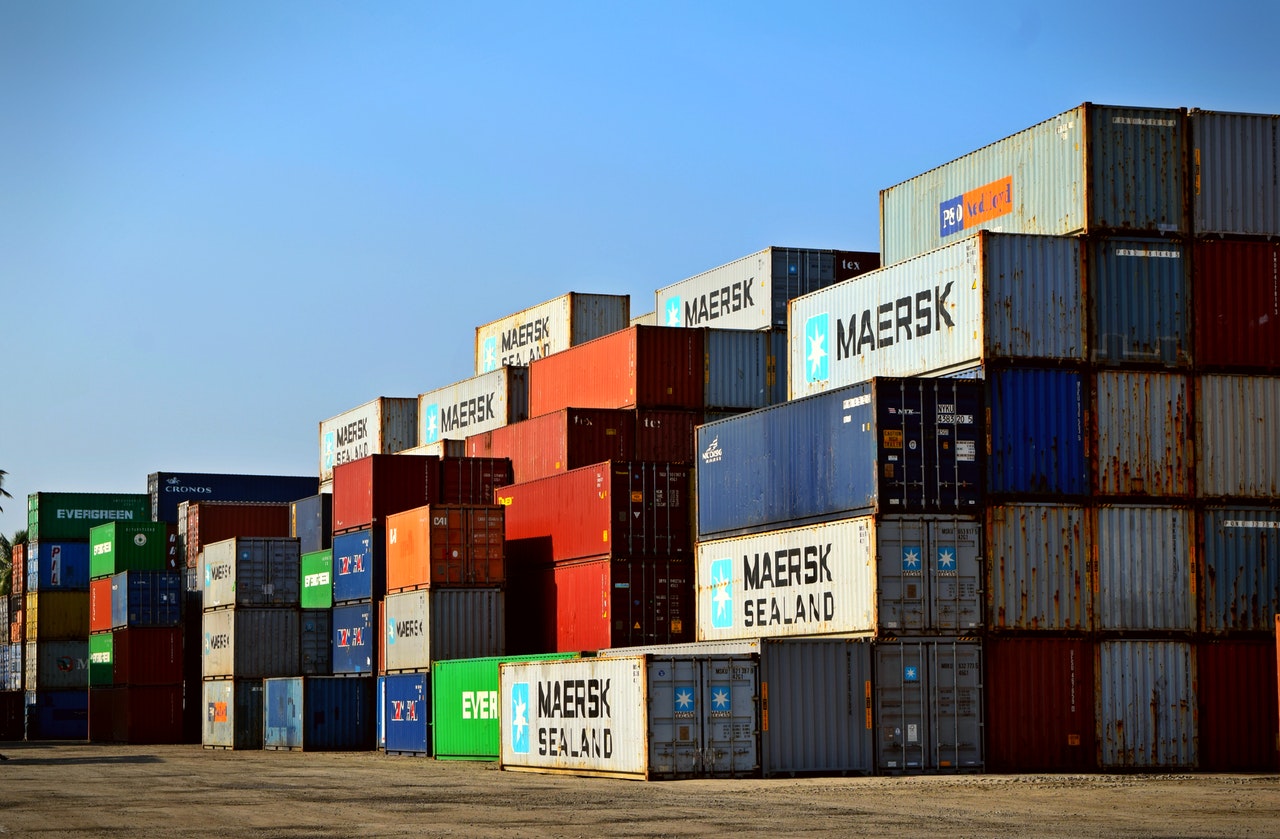
They are the conventional and standard containers which are either 20ft or 40ft. Both have the same height( 8ft 6ins) but differ in width.They are basically used for multi-purpose cargo transport and can be used over various methods of transport, including ship, rail, and truck. Dry containers are the most widely used containers. The 20ft dry containers are also known as intermodal shipping containers. The 20ft container has an average tare weight of 2,300kg and a payload capacity of 25,000kg. The 40ft dry container has a tare weight of 3,750kg and a payload capacity of 27,600kg.

kerilbert_logistics_40-feet-shippingcontainers
kerilbert_logistics_20ftshippingcontainers

HIGH CUBE CONTAINERS

High cube containers are like standard transportation holder measurements, however as their name recommends, they are higher.  These holders are utilized for particularly voluminous freight and excessively high or tall cargo. They are an inch taller (9ft 6 inches) than the 40ft dry container and have the same width. The tare weight of a high cube container is 3,940 kg and a payload capacity of 28,560kg.

kerilbert_logistics_high-cube-shippingcontainers

OPEN TOP CONTAINERS

Open top compartments are likewise fundamentally the same as standard payload holders, be that as it may, they can be top-stacked (i.e. load put in the holder from a crane). They are likewise good with entryway side stacking, i.e. with payload dangling from the overhead handle. Contingent upon the sort of payload you are delivery, for example, heavy loads, timber or scrap metal, an open top compartment might be the best choice. The 20ft container has an average tare weight of 2,350kg and a payload capacity of 28,130kg, while the 40ft dry container has a tare weight of 3,850kg.

kerilbert_logistics_open-top-shippingcontainers

FLAT RACK CONTAINERS

Flat rack containers are especially suitable for heavy loads and cargo that needs loading from the top or sides, such as pipes, heavy machinery, construction equipment or supplies. You will find collapsible containers and non-collapsible containers with or without walls. Flat rack containers are manufactured from steel and come in 20ft’ and 40ft’ sizes.

kerilbert_logistics_flat-rack-shippingcontainers

REEFER CONTAINERS/ REFRIGERATED

Reefer containers or refrigerated containers are used to transport goods requiring temperature-controlled conditions in transit, such as fruit, vegetables, dairy products and meat. It is fitted with a refrigeration unit which is connected to the carrying ship’s electrical power supply. They come with the two different standard, either in 20ft (tare weight – 3080kg, payload capacity – 27400kg) or 40ft (tare load – 4800, payload capacity – 27700kg).

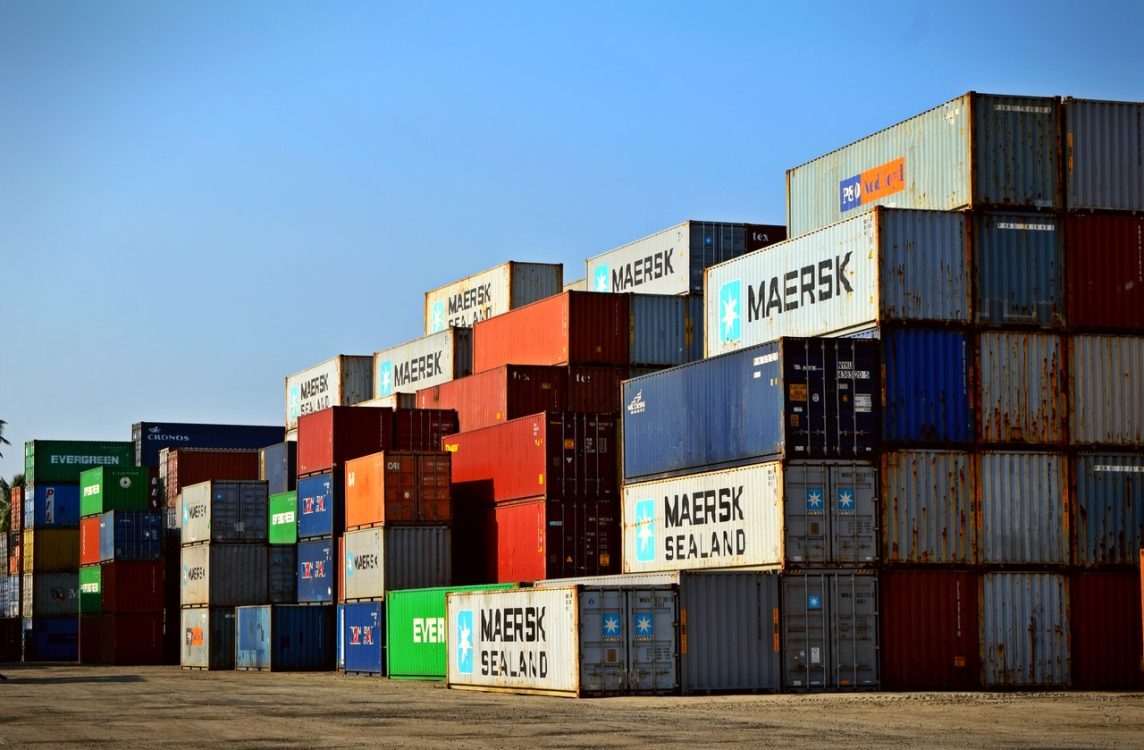
kerilbert_logistics_flat-rack-shippingcontainers
0 0 Continue Reading →

The Simple Steel Box that Transformed Global Trade

Perhaps the defining feature of the global economy is precise that it is global.

Toys from China, copper from Chile, T-shirts from Bangladesh, wine from New Zealand, coffee from Ethiopia, and tomatoes from Spain.

Like it or not, globalisation is a fundamental feature of the modern economy.

In the early 1960s, world trade in merchandise was less than 20% of world economic output, or gross domestic product (GDP).

Now, it is around 50% but not everyone is happy about it.

There is probably no other issue where the anxieties of ordinary people are so in conflict with the near-unanimous approval of economists.

Arguments over trade tend to frame globalisation as a policy – maybe even an ideology – fuelled by acronymic trade deals like TRIPS and TTIP.

But perhaps the biggest enabler of globalisation has not been a free trade agreement, but a simple invention: the shipping container.

It is just a corrugated steel box, 8ft (2.4m) wide, 8ft 6in (2.6m) high, and 40ft (12m) long but its impact has been huge.

0 0 Continue Reading →

FACTORS TO CONSIDER WHEN PICKING A SEA SHIPPING LINE

The boom in exportation and importation has given rise to the global increase of shipping carriers and logistics service provider. There are quite a number of factors to be considered while choosing a sea shipping line.

Enlisted below are few major factors needed to be considered:

Shipping Route: This is an important factor to be considered when selecting shipping carriers.  Some sea shipping lines ply along certain routes/destinations be it local or international shipping. It is imperative to opt for carriers that would go to your designated destination. Having this in mind while choosing, would help incorporate the best-fit shipping carriers in your option.

Reputation: Just selecting a sea shipping carrier with the cheapest rate might end up with bigger trouble as most times the consignment might get lost or take a long time to arrive or delivered. It is advisable to do a background check on each carrier you have in mind before engaging them. Endeavor to check for the registration and licensing of that shipping line to make sure that the carrier is compliant with all laws governing the shipping industry.  Also, check for other related documents issued by some associations which the shipping line must have.

Transit Timing and Holding Facilities: Timing is an important factor to check out for, as clients want their products delivered as early as possible. Hence, it is imperative to know the timeframe between the expected time of delivery and expected time of arrival from the carriers. Some shipping lines carry out direct shipping to a particular destination while other undergoes stoppage, which involves stopping in the different location to trans-load/offload some goods. This also affects the time of arrival of the consignment to a specified/final destination.

It’s also important to know that if your container arrives at the location earlier if you will have to pay for it to be held or if it’s worked into the overall price of the service. If there’s a chance you may be late picking up your items also ask what the fee is and where you will pick them up at. If your items need to be

Tracking Services:  It is always better to opt for carriers who offer remarkable tracking services. This enables the consignee to monitor his consignment while on transit. Most big shipping companies have an online site where customers can track their goods and status of arrival. This way, it will be easier for them to monitor if their consignment is on the way. With this tracking method, you can easily coordinate with your customers on shipping and delivery concerns.

Insurance: Insurance is also an important but overlooked criterion. Please note that all shipping carriers must provide insurance, peradventure the goods gets missing or damaged.  After all, you want to give yourself and customers that extra peace of mind that the item will be paid for if lost or damage.

P.S: Some insurance don’t offer insurance to vessels older than a specified age limit, it is mandatory to know the vessel’s age to be used for transportation. Using old vessels increases the risk of the vessel capsizing.

Variety of Container Size and Capacity

Selecting the right container is also necessary. Some goods can only be shipped by different kinds and sizes of containers. Depending on what you really want to ship and what you can leave behind will determine what size container will be needed for your carrier.

0 0 Continue Reading →

The Advantages of Sea Freight

The shipping and transport industry boasts a rich heritage founded in the very beginnings of international, transnational, and domestic transportation. Specifically, in parts of the world where the location of cities and abundance of natural waterways is conducive to shipping by boat, it’s only natural that it would become a critical part of that area’s shipping and trade infrastructure. In modern times, in spite of the rapidly developing sea and air transportation industries, sea freight continues to be a critical part of both local and world trade economies.

Sea freight is advantageous for several reasons, the most important of which are probably its cost, low environmental impact, and versatility.

Cost benefits
Depending on the origin and destination of the cargo, sea freight can be a lot more economically practical than or air freight. By giving the flexibility to ship in bulk, sea freight services provide economic solutions and keep the landed costs of your product down. Unless product availability requires a fast turn-around, smart businesses tend to plan ahead and choose sea freight over air freight.
Environmental benefits
Shipping by boat can also be far less damaging to the environment than other forms of shipping. By burning less fuel and consequently producing less harmful greenhouse gasses, freight transporting ships make up a much smaller contribution to air pollution than other shipping industries. An air freight service emits a higher amount of polluting gasses with less space capacity compared to sea freight services which are considered a much greener transportation mode with a higher carrying capacity
Versatility
Seafaring cargo vessels are incredibly accommodating when it comes to the size and nature of freight, as well. While air freight is constrained and more strictly suited to the delivery of large quantities of small goods, maritime freight vessels are versatile enough to ship a wide variety of cargo in addition to consumer goods. Cars, trucks, agricultural and industrial equipment as well as vast amounts of raw materials can all be shipped by sea. In fact, while large shipments of small manufactured goods by air and ground both domestically and internationally are commonplace, the shipment of industrial goods, raw materials, fuels and other large freight is altogether impractical using these forms of transportation.
If planned with enough lead time, businesses can reduce their carbon footprint by choosing sea freight shipping modes to transport their goods.

More time for document processing

Documentation plays an important role in any sea freight or air freight shipment. CAT (complete-accurate-timely) documentation is an industry process that guarantees hassle-free and timely deliveries. Air freight is undoubtedly the fastest transportation mode, however, unless your freight forwarder uses automated electronic processes to complete the transaction, customers are likely to experience documentation related delays. In some cases, it can defeat the entire purpose of using air freight services instead of sea freight. Customers ideally consider the complexity of documentation involved while using any mode of transportation and take advantage of longer sea freight transit times which allows more processing time to achieve CAT documentation.

0 0 Continue Reading →


Recent Comments by kbert

    No comments by kbert